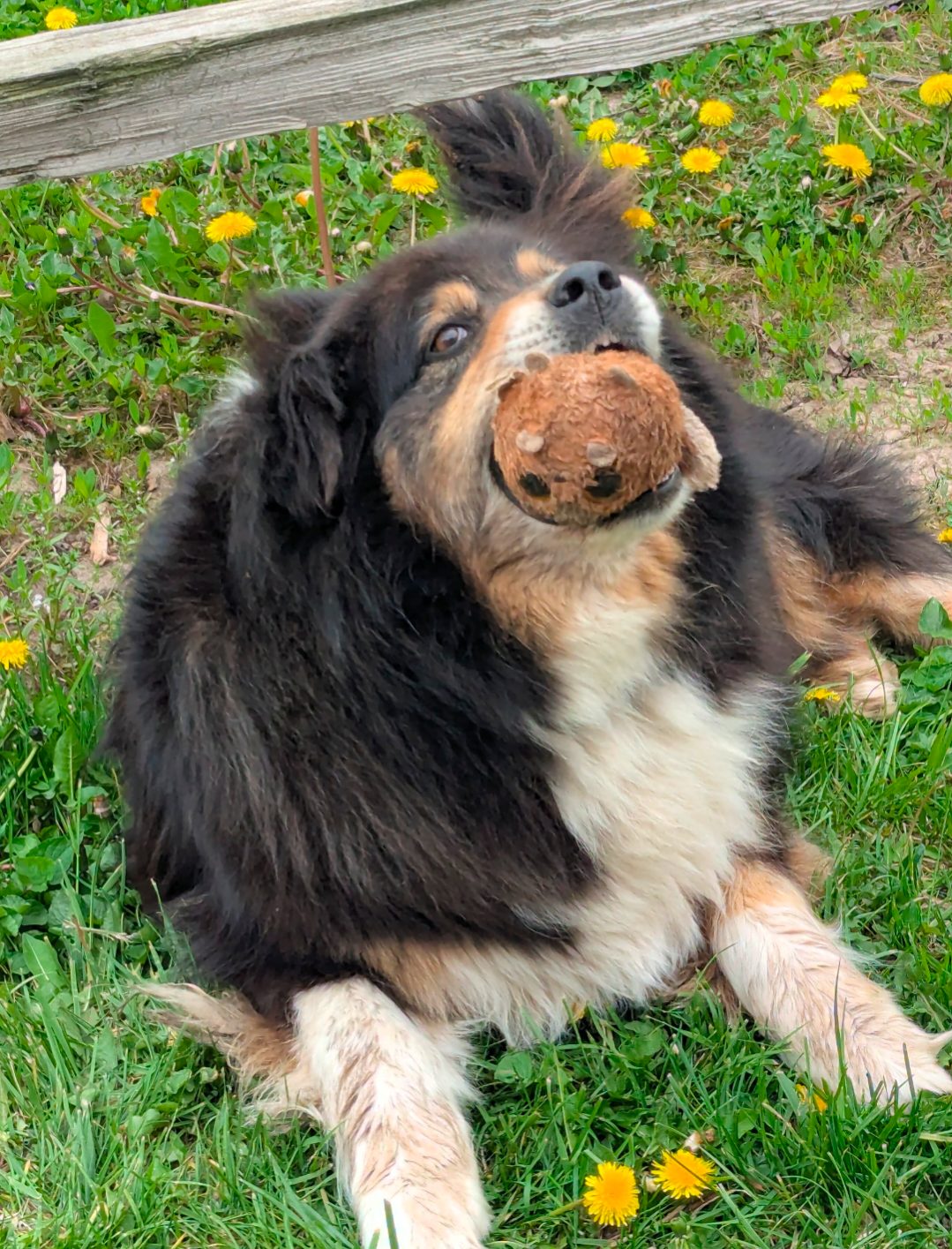
Some dogs don't play fetch — they practice it like a professional sport, at 6 AM, in the rain, while you're trying to drink coffee. An automatic ball launcher is a machine that throws the ball for you: the dog drops the ball in the top, the machine launches it, the dog chases it, repeat until everyone's happy. For high-energy breeds with owners who have jobs, it's one of the best energy-burners you can buy.
How they work and who they're for
The concept is simple: a hopper on top accepts a ball, a motor-driven wheel or air-pressure mechanism launches it 10–50 feet depending on settings, and the dog retrieves it and (ideally) drops it back in the hopper. Most models run on wall power with battery options, and most have a motion sensor that pauses launching when something is directly in front of the chute.
The ideal customer is the owner of a fetch-obsessed medium-energy dog — labs, goldens, border collies, heelers — who needs 20 minutes of hard running but whose human has 20 minutes of email to answer. It's also genuinely useful for owners with limited mobility or sore throwing shoulders: the machine doesn't get tired.
It's not for every dog. Dogs that don't already love fetch won't be converted by a machine. Anxious dogs may find the launch noise stressful. And giant breeds or tiny breeds at the extremes need careful ball-size matching (below). Think of the launcher as a fetch amplifier, not a fetch creator.
Indoor vs. outdoor models
Compact indoor launchers throw shorter distances — typically 10–25 feet — and use smaller, softer balls. They're designed for hallways and living rooms, and the best ones have a low arc so balls don't take out lamps. If your plan is rainy-day energy burning in the house, this is your category. Measure your longest clear indoor runway honestly before buying; a 25-foot throw needs 25 feet of unobstructed space.
Full-size outdoor launchers throw 30–50+ feet with standard tennis-ball-size balls and are built to sit on grass. They're louder, heavier, and more expensive ($100–200 vs. $60–120 for compact models), but they deliver the real-deal fetch experience. Many outdoor models are weather-resistant rather than waterproof — fine for a session in the yard, not for living outside in the rain.
The practical answer for most people: if you have a yard, get the outdoor-capable model and bring it inside on rainy days at the shortest distance setting. One machine, both jobs — just keep it dry in storage.
Ball size: the safety issue nobody skips
This is the part that actually matters for your dog's safety. Balls must be too large to fit entirely in the dog's mouth — a ball that lodges in the throat is a choking emergency, and it's the number-one real risk with ball play of any kind. Match the launcher's ball size to your dog: small launchers with 1.5-inch balls are for small dogs only; standard 2.5-inch tennis-ball launchers suit medium and large dogs.
Never use a small-ball launcher with a big dog, even if the dog "is gentle." Excitement changes behavior, and a mid-fetch gulp is all it takes. Conversely, oversized balls for tiny dogs are just frustrating — the dog can't carry them comfortably and loses interest.
Ball material matters too. Standard tennis balls are abrasive — the felt wears down tooth enamel over time with heavy chewers, and the glue and dyes aren't meant for chewing. Look for launchers that accept smooth rubber balls, and replace balls when they get slimy, cracked, or chewed. Slobbery balls also jam launchers, so keep a towel handy and wipe balls down during long sessions.
Distance settings, noise, and the training curve
Multiple distance settings aren't a luxury — they're how you use the thing in real spaces. Short for hallways, medium for the yard, long for the park. Random or variable-distance modes are even better: they keep the dog guessing instead of camping at the landing spot, which is both more fun and better exercise.
Noise is the make-or-break factor nobody expects. Launchers make a whirring wind-up sound before firing, and some dogs find it alarming at first. The fix is standard desensitization: treats for approaching the machine while it's off, treats while it runs without balls, short throws at first. Most dogs go from suspicious to obsessed within a few days. But if your dog is genuinely noise-phobic — thunderstorms, fireworks, vacuums all cause panic — a launcher may never be a good fit, and that's fine.
Training the drop-in is the fun part. Dogs naturally bring the ball back to you, not to the machine. Teach it in steps: reward the dog for dropping the ball near the launcher, then in the hopper area, then in the hopper. Most fetch-driven dogs figure out the loop within a week because the reward — another throw — is exactly what they wanted. Some never get the drop-in and just bring the ball to you for reloading, which still works fine; you're just the caddy.
The safety sensor deserves a mention: most decent launchers pause if a dog (or child) is standing directly in front of the launch chute. Test this before trusting it, and teach kids never to look into the chute. It's a machine that fires projectiles — respect it accordingly.
What to skip
Skip no-name launchers with no safety sensor — the price difference isn't worth a ball to the face. Skip models with only one distance setting; you'll outgrow it immediately. Skip anything whose balls aren't replaceable or are a weird proprietary size that locks you into one brand's refills. And skip the idea that a launcher replaces you: dogs need interactive play with their humans too. The launcher handles the 4 PM energy dump; it doesn't replace the weekend hike.
Also skip leaving the launcher running unsupervised as a babysitter. Jams happen, balls get chewed into pieces, and a dog left alone with a machine will eventually try to "help" it in creative, destructive ways. Launchers are supervised-play equipment.
Maintenance: keeping it running
Launchers are simple machines, and simple machines still need care. Slobber is the number-one killer: wet balls leave residue on the launch wheels, which reduces distance and eventually causes jams. Wipe the wheels and chute with a damp cloth after heavy sessions. Check the hopper sensor area for stuck kibble-sized debris if the machine stops detecting balls. For battery models, don't store the launcher with dead batteries inside — leakage corrodes contacts. Once a season, inspect the power cord and plug for chew damage, because a bored dog left near a plugged-in launcher will investigate the cord eventually. Ten minutes of maintenance a month keeps a $150 machine running for years instead of one summer.
Frequently asked questions
Are automatic ball launchers safe?
Yes when used as directed: correct ball size for the dog, supervised play, and a launcher with a working safety sensor. The main risks are choking on wrong-sized balls and unsupervised misuse — both owner-controllable.
How long does it take a dog to learn to use one?
Most fetch-loving dogs learn the drop-in loop within a few days to a week with treat-based training. Some dogs never learn the drop-in and just return the ball to you for reloading, which still works.
Can I use it indoors?
Compact models at short distance settings work in long hallways or large rooms. Clear breakables from the flight path, use the shortest setting, and expect some chaos while the dog learns the routine.
Do tennis balls damage dogs' teeth?
Heavy chewing on standard tennis balls can wear tooth enamel because of the abrasive felt. For regular launcher use, smooth rubber balls are the better choice, and retire any ball that gets chewed or cracked.