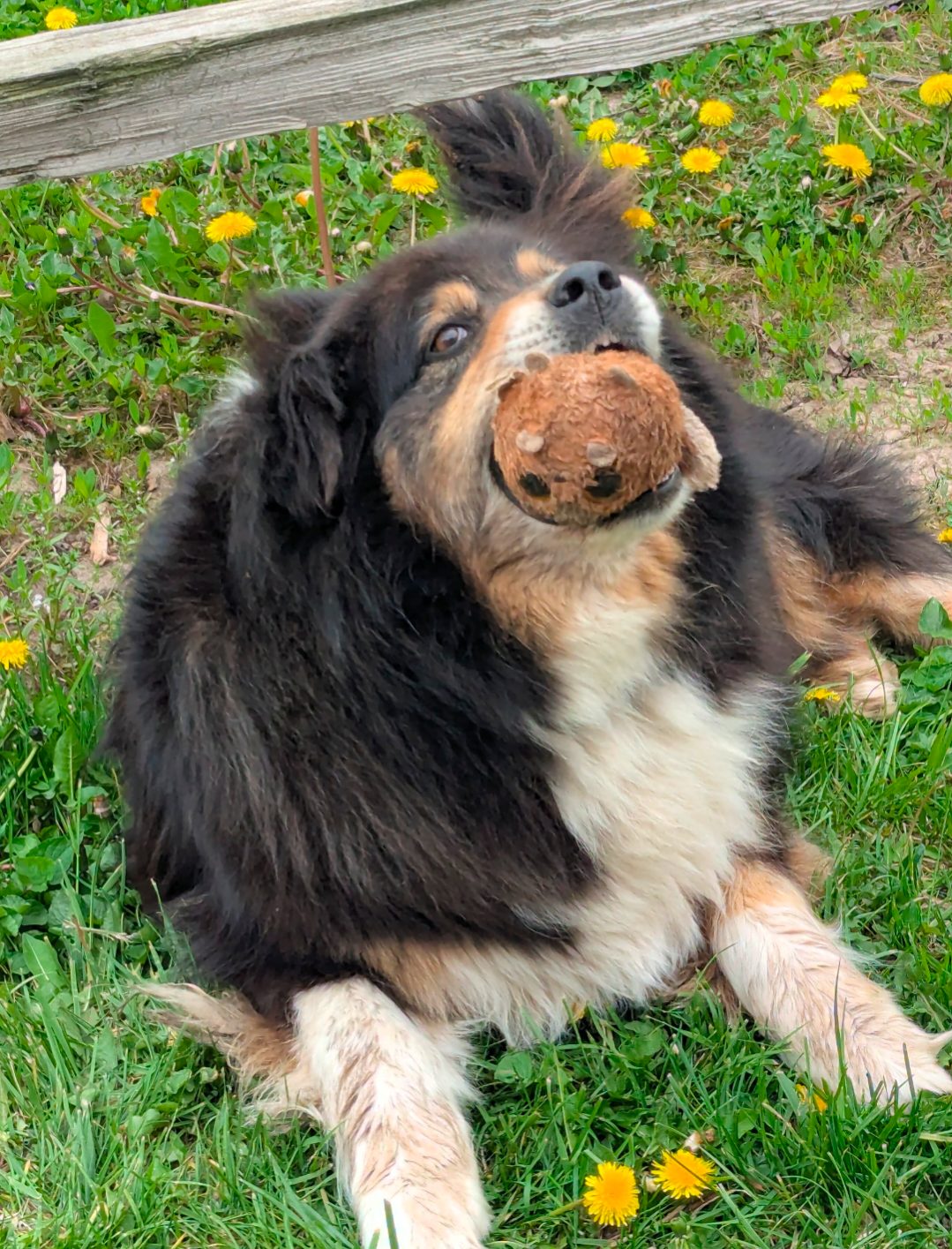
Power chewers turn most toys into confetti in minutes — and swallowed chunks mean vet visits. This guide ranks chew toy types by toughness, explains how to match the toy to your dog's chew style, and covers the safety rules that matter more than any toy.
Know your dog's chew style first
Not all aggressive chewers chew the same way. Shredders rip soft toys apart but don't eat the pieces — they need toys designed to be destroyed safely (like snuffle-style toys) plus tough rubber for real chewing. Gnawers work one spot methodically and can wear down nylon over weeks — they do well with very hard rubber and nylon bones. Gulpers try to swallow chunks of anything — they need the toughest, largest toys and constant supervision, because no toy is gulp-proof.
Match the toy to the style and you stop wasting money on toys engineered for a different dog.
The toughness ladder, bottom to top
- Plush toys: enrichment, not chewing. Even "tough" plush dies fast with power chewers. Fine for gentle play and comfort; never leave them unsupervised with a shredder.
- Rope toys: good for tug, bad for solo chewing — ingested rope fibers can cause intestinal blockages. Supervised tug only.
- Squeaky vinyl: the squeaker is the target and it's a choking hazard once extracted. Fun under supervision, trash afterward.
- Dense rubber (Kong-style): the workhorse tier. Hollow rubber toys you can stuff with peanut butter and freeze keep dogs busy for an hour and survive most chewers. Size up — a toy that fits entirely in the mouth is a swallowing risk.
- Nylon bones: extremely durable for gnawers; they wear down into rice-sized shavings rather than chunks. Replace when worn small enough to swallow.
- Natural chews (bully sticks, yak cheese, antlers): highly motivating but consumable — they disappear, so cost adds up, and hard antlers can crack teeth in aggressive chewers. Use holders that grip the last inch so it can't be swallowed whole.
The safety rules that matter most
Supervise every new toy until you know how the dog destroys it. Remove a toy the moment it starts shedding pieces bigger than a pea. Size toys for the dog in front of you, not the weight range on the package — if the dog can fit the whole thing behind their canines, it's too small. And rotate toys weekly; novelty makes an old toy exciting again, which is free enrichment.
What this guide does not cover
We're not veterinarians: if your dog is chewing obsessively, drooling excessively, or has broken teeth, see a vet — dental fractures from too-hard chews are real and expensive. We also don't review specific brands; durability varies by production batch, so check recent reviews before buying.
Frequently asked questions
Are antlers safe for aggressive chewers?
They're durable but very hard — veterinary dentists report slab fractures from antlers and bones regularly. For true power chewers, dense rubber is the safer daily driver; save antlers for supervised, limited sessions if at all.
How often should I replace chew toys?
Inspect weekly. Replace rubber toys with missing chunks, nylon bones worn to swallowable size, and anything with exposed squeakers or stuffing immediately.
My dog destroys every toy in minutes. What now?
You're likely buying a tier too soft for your dog's style. Move up the toughness ladder, size up, and add frozen stuffed rubber toys — the freezing doubles the work time.
Can puppies have the same tough toys?
Puppy teeth are softer — use puppy-specific rubber (softer compound) until adult teeth arrive around 6 months, then graduate to the adult toughness tiers.