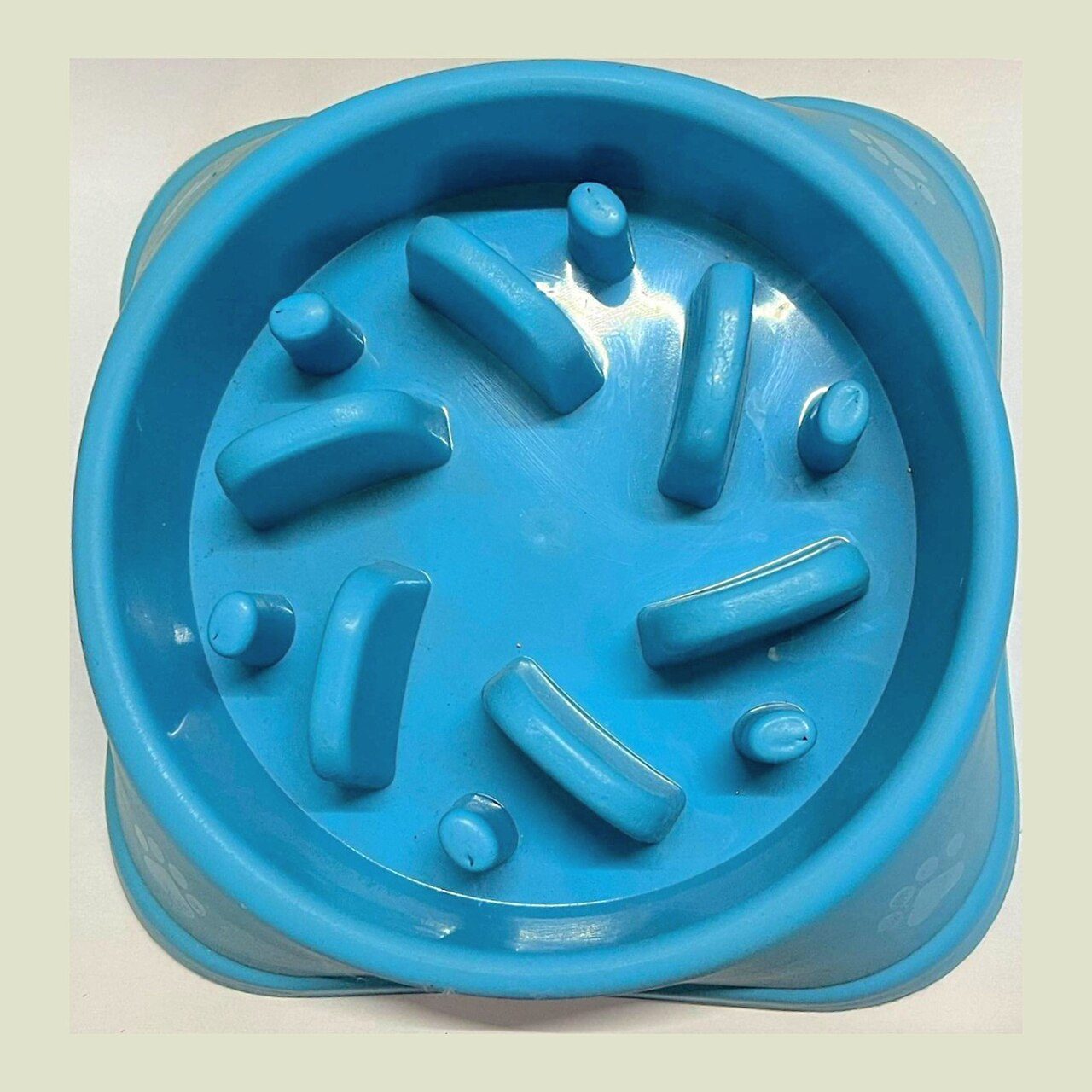
Some dogs eat. Others vacuum. If your dog finishes dinner before you've finished pouring it — then coughs, gags, or throws it back up — a slow feeder bowl is one of the cheapest, most effective fixes in all of dog gear. It's just a bowl with ridges and mazes molded in, forcing the dog to work around obstacles instead of inhaling kibble by the mouthful.
Why fast eating is actually a problem
Gulping isn't just messy — it has real health consequences. Dogs that eat too fast swallow large amounts of air along with food, which causes the vomiting, gagging, and uncomfortable bloating many owners see right after meals. In large, deep-chested breeds (Great Danes, German shepherds, boxers, standard poodles), rapid eating is a recognized risk factor for gastric dilatation-volvulus — bloat — where the stomach fills with gas and can twist. Bloat is a life-threatening emergency, and while no bowl prevents it outright, slowing intake is one of the standard veterinary recommendations for at-risk dogs.
Beyond the scary stuff, fast eaters tend to be anxious eaters: resource guarding, food obsession, and scarfing are often tangled together. Slowing the meal down doesn't just help digestion — it gives an anxious dog's brain something to do besides panic about the food disappearing, which can genuinely reduce mealtime stress over time.
One honest caveat: if your dog suddenly starts eating frantically when it never did before, or shows other changes (weight loss, excessive thirst, restlessness), that's a vet conversation, not a bowl purchase. Medical causes come first; gear comes second.
How slow feeders work
A slow feeder is a bowl with raised ridges, spirals, or maze walls molded into the eating surface. Kibble falls into the channels between the obstacles, so the dog has to push food around with its tongue and nose instead of scooping whole mouthfuls. A good slow feeder stretches a meal from under a minute to five or ten minutes — roughly a 5–10x slowdown.
Difficulty levels are real and worth paying attention to. Shallow, widely spaced ridges slow a moderate gulper just fine. Deep, tight mazes are for committed inhalers. The mistake is buying the hardest maze for a dog that's never used one: a frustrated dog may flip the bowl, give up and refuse to eat, or chew the ridges in protest. Start one level easier than you think you need. You can always upgrade; you can't un-teach a dog that the new bowl is the enemy.
Slow feeders work with dry kibble best. Wet food works too but turns cleaning into a project (more on that below). They're generally a poor fit for raw diets with large chunks, which don't navigate mazes well.
Materials: what the bowl is made of matters
Plastic slow feeders are the cheapest and most common — usually $8–15. They're lightweight, come in endless maze patterns, and work fine. Downsides: determined chewers can gnaw the ridges, deep scratches harbor bacteria over time, and some dogs develop chin acne from plastic bowls. If you go plastic, retire the bowl when the ridges get chewed or deeply scored.
Stainless steel slow feeders cost more ($20–35) and the maze options are simpler — steel can't be molded into intricate patterns as easily. But steel is dishwasher-safe, nearly indestructible, doesn't harbor bacteria in scratches, and won't cause plastic-related skin irritation. For power chewers and dogs with sensitive chins, steel is worth the premium despite the simpler patterns.
Silicone and melamine feeders sit in the middle: more pattern variety than steel, softer on teeth than hard plastic, usually dishwasher-safe. Look for food-grade silicone and a non-slip base — a slow feeder that slides across the kitchen floor defeats its own purpose as the dog chases it.
Whatever the material, a non-slip base (rubber ring or weighted design) is non-negotiable. A sliding maze bowl becomes a hockey puck, and a frustrated dog plus a moving bowl equals a flipped bowl.
Sizing and muzzle shape
Size the bowl to the dog's meal, not the dog's ego. The kibble should sit in the channels without heaping above the ridges — if food piles over the top of the maze, the dog eats off the top and the maze does nothing. Most brands size by cups of food (1 cup, 2 cup, 4 cup); measure your dog's actual meal and buy accordingly.
Muzzle shape changes everything. Long-nosed dogs (collies, greyhounds, shepherds) handle deep, narrow mazes well — their snouts reach in. Flat-faced breeds (pugs, bulldogs, shih tzus) physically cannot work deep mazes; their short muzzles can't reach the channels, and they'll just get frustrated. For brachycephalic dogs, choose shallow, wide-ridge patterns specifically — some brands make "flat-face friendly" designs, and they're worth seeking out.
For giant breeds, check the bowl's overall footprint and stability. A lightweight maze bowl sized for 4 cups of food can still get bulldozed by an enthusiastic Dane. Heavier is better here, or look for slow-feeder inserts that drop into a sturdy bowl you already own.
Cleaning: the part nobody mentions
Mazes trap food. Dried kibble dust and saliva collect in the channels, and a slow feeder that's never properly cleaned becomes a bacterial science project. Dishwasher-safe is the feature to prioritize — top-rack dishwasher cleaning after every few uses keeps the bowl hygienic with zero effort.
For wet food users, rinse the bowl immediately after the meal before food dries into the maze crevices. A bottle brush or old toothbrush reaches channels that sponges skip. If the bowl develops a slimy film or an odor that survives washing, replace it — that film is bacterial biofilm, and no amount of wishful thinking makes it safe.
When a bowl isn't enough
Slow feeders solve mechanical gulping. They don't solve everything. If your dog guards food aggressively, eats non-food objects, or shows signs of bloat (restlessness, unproductive retching, swollen abdomen — that's an emergency vet visit, immediately), gear isn't the answer. Raised feeders, incidentally, are often suggested for fast eaters, but the evidence on raised bowls and bloat is mixed and some studies associate them with increased risk in large breeds — ask your vet rather than following internet folklore.
Also worth knowing: puzzle feeders and snuffle mats (covered in our food puzzle guide) achieve the same slowdown through foraging rather than mazes, and many dogs find them more enriching. There's no rule saying dinner must come from a bowl at all.
Travel bowls and multi-dog households
Slow feeders aren't just for the kitchen. Collapsible silicone maze bowls exist for travel, and they're worth packing if your dog eats fast on the road — new environments make anxious eaters gulp even faster. For multi-dog households, slow feeders have a second benefit: they stagger finishing times. When one dog inhales dinner in 30 seconds and then loiters around the slower eater's bowl, you get tension. Matching the speeds with feeders for the fast dog (or puzzle feeders for both) keeps mealtimes peaceful. Feed dogs in separate spots regardless — no bowl design replaces the basic rule that each dog eats undisturbed.
Frequently asked questions
Are slow feeder bowls safe?
Yes for most dogs, with two caveats: supervise at first to make sure the dog doesn't chew and swallow pieces of the maze, and retire plastic bowls once ridges get chewed or deeply scratched. Stainless steel is the safest long-term option.
Can puppies use slow feeders?
Yes — puppies are often the worst gulpers. Use an easy, shallow pattern so the puppy succeeds rather than getting frustrated, and size down so the meal fits the channels.
Do slow feeders work for wet food?
They do slow the dog down, but cleanup is significantly harder — wet food packs into maze crevices. Rinse immediately after meals and choose dishwasher-safe designs.
My flat-faced dog can't use a maze bowl. What then?
Look for shallow, wide-ridge patterns made for brachycephalic breeds, or switch strategies: spread kibble on a snuffle mat or a large baking sheet. Spreading food over a wide flat area slows eating without requiring a long muzzle.