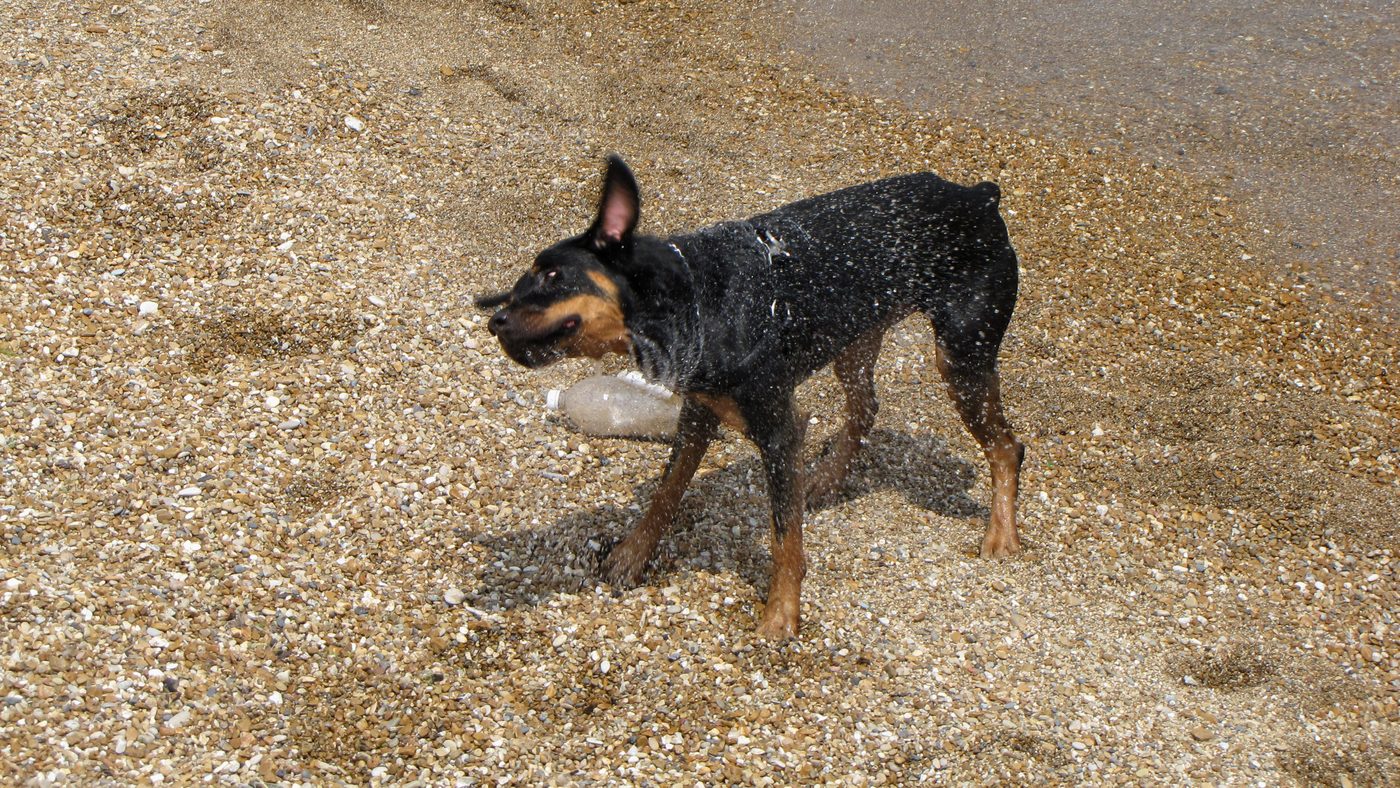
Every dog owner knows the moment: the bath is done, and the dog's sole mission is to shake half the tub onto you, the walls, and the couch. Drying gear exists to win that fight — and lately the options got a lot more interesting than a towel.
The viral drying bag, explained
You may have seen the videos: a wet dog zipped into a puffy bag with only its head poking out, a dryer hose clipped on, and fifteen minutes later a perfectly fluffed dog emerges. These pet drying bags really do what the videos show — the bag holds warm air around the dog so drying happens hands-free, the enclosed fur stays off your bathroom, and the muffled airflow is calmer than a dryer pointed at a nervous dog.
The honest trade-offs: sizing is everything (too tight is miserable, too loose leaks air), some dogs hate the confinement and will tell you loudly, and you must use the warm setting — never hot — and never leave the dog unattended in the bag. Prices run around $25–35. For the right dog — especially thick-coated breeds that take forever to air-dry — it's genuinely useful, not just a gimmick.
High-velocity dryers: the groomer's shortcut
Professional groomers don't wait for evaporation — they use force dryers that blast water off the coat with room-temperature, high-speed air. No heat means no burn risk, and on double coats (huskies, goldens, shepherds) a force dryer does in ten minutes what towels can't do in an hour: it lifts the dense undercoat so air reaches the skin, which is where dampness hides and hot spots start.
Downsides: they're loud, they're $60–150+, and a noise-sensitive dog needs gradual introductions with treats before the first real session. What you should not do is substitute your own hair dryer on high heat — human dryers get far hotter than pet dryers and the concentrated heat burns skin fast.
The humble towel, upgraded
Before any gadget, the first thirty seconds belong to a towel. Microfiber dog towels absorb several times their weight in water — one good microfiber towel pulls off more water than three bath towels — and drying mitts let you work the towel into the coat with both hands. Towel first, gadget second: every dryer works faster on a dog that's already been toweled down.
Drying coats for the ride home
Absorbent wearable robes — basically a wearable towel that fastens around the dog — are the unsung option. They're perfect for the car ride home from the lake or the groomer, and for rainy-day walks when the dog comes back soaked. No power, no noise, no fuss; the coat wicks while the dog naps.
Safety rules that matter
Warm, not hot — always. Keep airflow moving and away from ears; blowing directly into ear canals is miserable for the dog. Never leave a dog unattended in a drying bag or drying box, and watch for overheating signs (heavy panting, restlessness, drooling). Puppies, seniors, and flat-faced breeds overheat faster, so keep sessions short for them. And brush before the bath, not after — water tightens mats, and drying a matted coat bakes the mats in.
Frequently asked questions
How long does a drying bag take?
Makers claim 12–25 minutes for most dogs after toweling. Thick double coats run longer; toy breeds are quick. If the dog is still damp, the bag was probably oversized for the dog.
Can I just use my hair dryer?
Only on the cool or low-warm setting, kept moving, held well away from the skin — and honestly, a pet force dryer is safer and faster. Never use high heat.
Do drying bags work on thick double coats?
Yes — circulating air is actually ideal for undercoat, since it lifts and separates the dense fur rather than drying only the top layer. Towel thoroughly first for best results.
My dog is terrified of the dryer. Help?
Desensitize gradually: dryer off, treats; dryer on across the room, treats; closer over several days. The muffled airflow inside a drying bag is calmer than a direct dryer for many nervous dogs — but let the dog's reaction decide, not the marketing.