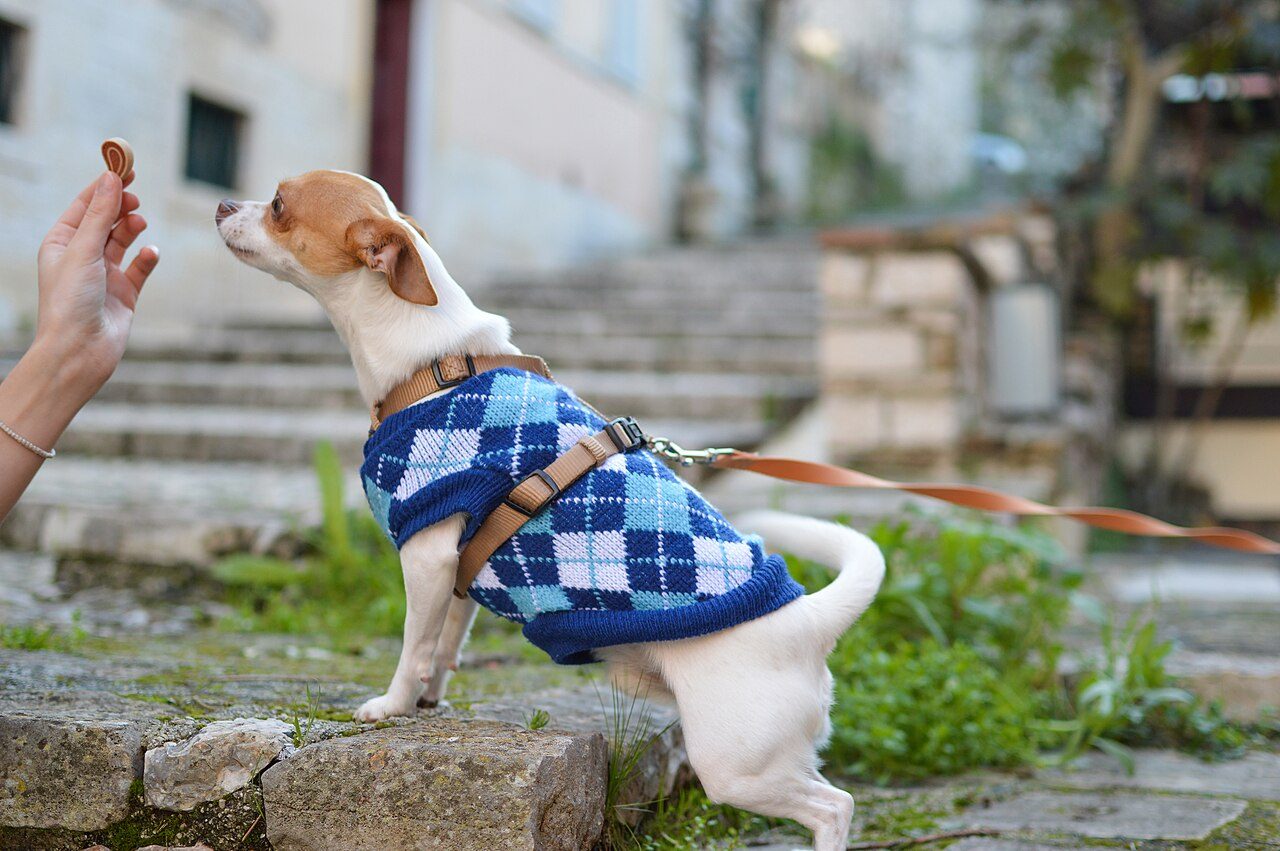
The treat is the paycheck, and dogs are brutally honest about bad pay. This guide explains what makes a training treat work (soft, small, smelly), when to use high-value versus everyday rewards, and which overpriced options to skip.
The three traits that matter
Forget brand claims and ingredient poetry. A training treat works if it is:
- Soft. The dog should swallow it in under two seconds. Crunchy biscuits break focus — the dog is still chewing while you've moved on to the next rep. Soft treats keep training rhythm tight.
- Small. Pea-sized. You'll deliver dozens of reps per session, and a big treat means a full dog and a finished session in ten minutes. If a treat is large, break it into pieces — most commercial "training treats" are still too big out of the bag.
- Smelly. Strong aroma beats fancy ingredients. Freeze-dried meat, cheese, and fishy treats out-motivate bland biscuits for almost every dog. The smellier the treat, the less you need to wave it under their nose.
Build a treat hierarchy
Not all reps deserve the same pay. Use a three-tier system:
Everyday treats (kibble or basic soft treats): for known behaviors and easy reps around the house. Mid-value (commercial soft training treats, cheese cubes): for new behaviors and moderate distractions. Jackpot treats (real chicken, freeze-dried liver, hot dog bits): for breakthroughs, recalls, and high-distraction environments like the dog park.
Paying jackpot wages for sitting in the kitchen devalues the currency. Save the good stuff for the hard stuff, and the dog learns that difficult = delicious.
What to skip
Overpriced "training-specific" treats that are just small biscuits at triple the price — check the ingredient list against regular soft treats. Anything with rawhide, which is a choking and blockage risk with zero training benefit. Giant "reward" bones that take five minutes to eat — they kill training momentum. And treat-dispensing gadgets for basic training; your hand is faster and the timing is better.
Also skip training on a full stomach. Train before meals, not after — a satiated dog's treat motivation drops off a cliff.
How many treats is too many?
Treats should stay under 10% of daily calories — for a 50-pound dog that's roughly a small handful of pea-sized treats per session, which is plenty for a focused 10-minute session. Keep sessions short and end on a win; three great five-minute sessions beat one sloppy thirty-minute one. And factor treats into meals: heavy training day means a slightly smaller dinner.
What this guide does not cover
This is about rewards, not methods — if you're dealing with fear, reactivity, or aggression, find a certified force-free trainer rather than a better treat. Dogs with allergies, pancreatitis, or kidney disease need vet-approved treats; rich training treats can trigger real medical episodes in sensitive dogs.
Frequently asked questions
Can I just use my dog's kibble for training?
For easy reps at home, yes — it's free and calorie-neutral. For new behaviors or distractions, kibble rarely motivates enough. Keep kibble for the easy stuff and real treats for the hard stuff.
Are commercial training treats worth it over hot dog pieces?
Hot dogs work brilliantly and cost little, but they're salty and messy in pockets. Commercial soft treats are the convenient middle ground — less smelly to carry, pre-sized, and consistent.
My dog isn't food motivated. Now what?
Almost all dogs are food motivated under the right conditions — try smellier treats, train before meals, and rule out stress (stressed dogs won't eat). A small minority genuinely prefer toy play as a reward; use a tug toy as the paycheck.
When do I stop using treats?
You don't stop — you fade to intermittent reinforcement. Once a behavior is reliable, reward randomly (every third or fifth rep) with occasional jackpots. Behaviors on intermittent schedules are actually more durable than continuously rewarded ones.