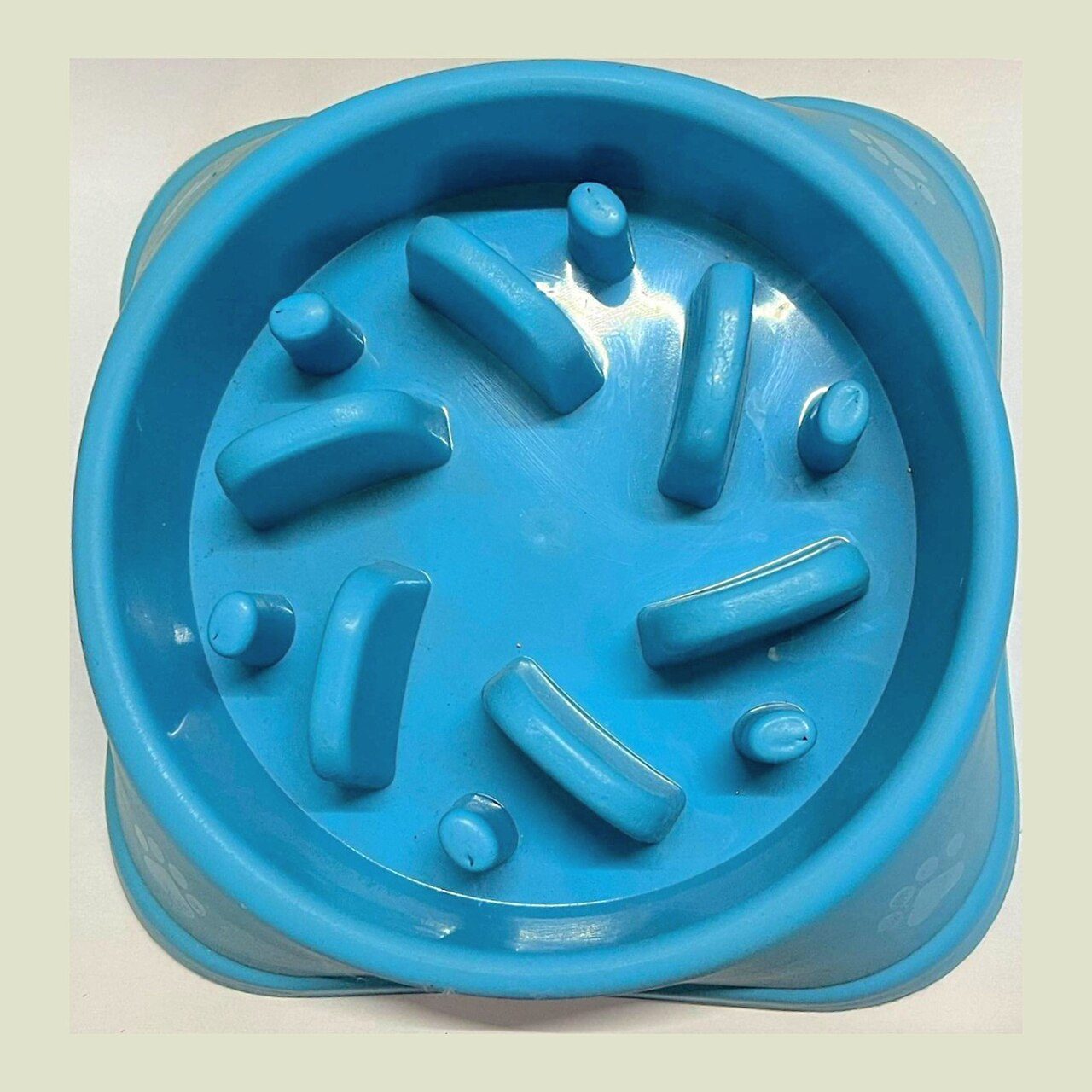
A bored dog is a destructive dog. Food puzzles turn meals into mental work — fifteen minutes of sniffing and problem-solving tires a dog out more than a walk around the block. This guide ranks puzzle types by difficulty and cleanup, so you can match the toy to your dog's brain.
Why mental exercise beats more physical exercise
Many owners respond to a hyper dog with more running — and accidentally build a fitter, more energetic dog. Mental work fatigues dogs differently: nose work and problem-solving engage the brain's reward systems and leave dogs genuinely settled. Ten minutes with a snuffle mat often does what an extra mile couldn't.
Puzzles are also the best tool for specific problems: fast eaters who inhale meals (bloat risk in deep-chested breeds), dogs alone during work hours, and rainy days when walks aren't happening.
The puzzle types, easiest to hardest
- Slow-feeder bowls. Raised ridges turn a 30-second inhale into a 5-minute meal. The easiest entry point — every fast eater should have one. Dishwasher-safe is the feature that matters.
- Snuffle mats. Fleece strips hide kibble; the dog forages with their nose. Excellent for beginners and seniors, nearly indestructible (there's nothing to chew through functionally), and machine-washable.
- Stuffable rubber toys. Smear peanut butter inside, freeze overnight, hand it over. Difficulty scales with how densely you pack it — this is the adjustable-difficulty puzzle.
- Sliding-compartment puzzles. Wooden or plastic boards where the dog noses or paws sliders to reveal treats. Great intermediate step; supervise, because frustrated dogs flip the whole board.
- Multi-step puzzles. Toys requiring sequences — lift, then slide, then spin. The peak of dog puzzling. Start here only if your dog already solves intermediate puzzles, or frustration wins.
The golden rule: let the dog win early
The number one mistake is starting too hard. A dog that can't solve a puzzle in two minutes doesn't try harder — they chew the puzzle, or they quit and learn that puzzles are stupid. Make the first sessions embarrassingly easy: treats half-visible, compartments open. Difficulty should ramp over weeks, not minutes.
And match the puzzle to the dog's style: nose-driven dogs (beagles, bloodhounds) live for snuffle mats; paw-driven problem solvers (terriers, poodles) prefer sliding compartments; power chewers need rubber-based puzzles that survive frustration — pair with our chew toy guide for the tough ones.
Cleanup: the hidden cost
Wet food and peanut butter in puzzle crevices gets disgusting fast. Prioritize dishwasher-safe puzzles and simple geometries — intricate designs with tiny crevices look clever and clean terribly. A bottle brush lives next to our puzzle toys permanently. If a puzzle isn't dishwasher-safe and has crevices, it has a two-week lifespan in our house before it gets retired.
What this guide does not cover
Puzzles manage boredom; they don't treat separation anxiety or compulsive disorders — a dog in genuine distress needs a veterinarian or behaviorist, possibly plus a dog camera so you can see what's actually happening. We also don't review specific brands.
Frequently asked questions
Can I just use my dog's regular meals in puzzles?
Yes — that's the ideal. Feed entire meals through puzzles instead of a bowl. It costs nothing extra and turns every meal into enrichment.
My dog ignores the puzzle and stares at me. Why?
It's too hard, or the reward isn't high-value enough. Make it easier and use smellier treats — kibble alone rarely motivates a beginner.
Are puzzle toys safe unsupervised?
Slow feeders and snuffle mats: generally yes. Hard plastic puzzles with small removable parts: no — supervise until you know your dog won't chew off and swallow pieces.
How many puzzles does one dog need?
Three to four in rotation is the sweet spot. Rotate weekly so old puzzles feel new again.