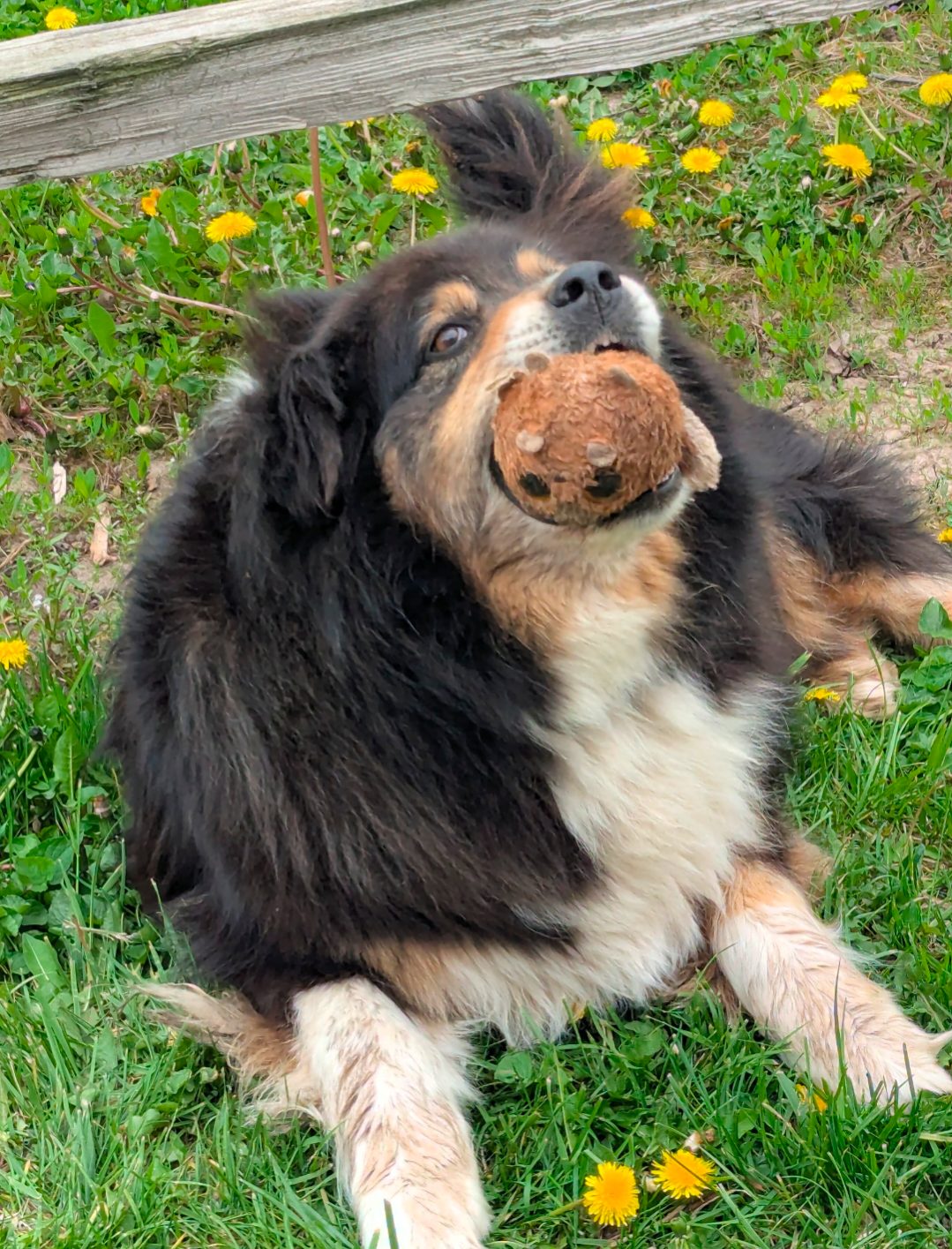
Most destroyed couches, chewed baseboards, and 2 a.m. zoomie sessions trace back to one thing: a bored dog with an underworked brain. Physical exercise helps, but mental exercise tires a dog faster — fifteen minutes of problem-solving can do what an hour-long walk cannot. Interactive toys are built for exactly that: toys that move unpredictably, dispense food, or require the dog to figure something out. This guide covers the five types that actually hold a dog's attention, how to match the toy to your dog's play style, and the safety rules that keep playtime fun.
Why mental exercise beats another walk
Dogs evolved to work for their food — tracking, chasing, digging, dissecting. A bowl of kibble eaten in ninety seconds satisfies none of that wiring, and a leashed walk around the block satisfies only some of it. The leftover mental energy goes looking for a job, and it usually finds one you did not assign: counter-surfing, fence-running, excavating the yard, or redecorating with couch stuffing.
Interactive toys give that energy a legitimate outlet. A dog working a treat-dispensing toy is practicing persistence, problem-solving, and impulse control — the same skills that make training stick. Behaviorists consistently find that dogs with regular enrichment settle faster, chew less destructively, and handle alone-time better. This is not spoiling the dog; it is meeting a need as basic as the walk. And for rainy days, injuries, senior dogs, or high-energy breeds in apartments, interactive toys are sometimes the only practical outlet available.
The five types of interactive toys, honestly compared
Motion-activated / electronic toys: balls and plush toys with built-in motors that roll, wiggle, chirp, or vibrate when touched — then go still, inviting another nudge. Excellent for dogs that chase and pounce; the unpredictability holds attention far longer than a static toy. Downsides: they need charging or batteries, most are not chew-proof (supervise), and the novelty can wear off for dogs that prefer food motivation.
Treat-dispensing toys: hollow rubber toys, wobblers, and rolling dispensers that release kibble as the dog bats, rolls, or chews them. The gold standard of enrichment — food motivation is nearly universal, difficulty is adjustable (freeze the filling to make it last longer), and a frozen stuffed toy can buy you a genuinely quiet hour. See our food puzzle guide for the deep version of this category.
Snuffle and foraging toys: fabric mats and toys with folds and pockets where you hide kibble, engaging the nose — a dog's primary sense. Sniffing is intensely tiring mental work; ten minutes of snuffling can settle a dog like a long walk. Great for seniors, puppies, and dogs on restricted exercise. Machine-washable mats are worth the small premium.
Interactive tug and fetch toys: rope tugs with bungee handles, flirt poles, and launchers that turn you into part of the game. These build the human-dog bond more than any solo toy can, and a flirt pole — essentially a giant cat toy for dogs — delivers enormous exercise in a small yard. The catch: they require your participation, which is the point and the limitation.
Puzzle sliders and flipping toys: boards with sliding compartments, flip lids, and removable pieces hiding treats. Fantastic for clever dogs that solve simple dispensers in minutes — you can increase difficulty by adding pieces. Best as supervised activities rather than leave-alone toys, since determined chewers will skip the puzzle and eat the board.
Matching the toy to the dog
The destroyer: power chewers need rubber rated for aggressive chewing and toys with no glued-on parts, squeakers, or stuffing to eviscerate. Start with treat-dispensing rubber toys and size up — a toy that is slightly too big is safer than one slightly too small. See our tough chew toy guide for the durability-first picks.
The thinker: border collies, poodles, shepherds — dogs that learn the puzzle in one session and then look bored. Rotate toys (novelty is the enrichment), increase difficulty with frozen fillings and multi-step puzzles, and teach new tricks — training is the ultimate interactive toy.
The chaser: terriers, sighthounds, herding breeds that live for motion. Flirt poles, motion-activated balls, and automatic ball launchers for solo fetch sessions. Manage arousal: end chase games with a calm sniffing activity so the dog learns to come down, not just rev up.
The senior: older dogs still need mental work even when the body slows down. Snuffle mats, gentle treat dispensers, and low puzzle boards keep the mind engaged without stressing joints. Softer rubber and easy-open compartments suit weaker jaws.
The puppy: puppies need short, easy wins — simple treat balls, soft snuffle mats, and supervised tug. Avoid anything with small detachable parts, and keep sessions to a few minutes; an overtired puppy is a bitey puppy.
Safety rules: the non-negotiable part
Supervise new toys. Every toy is safe until your specific dog finds the way to destroy it. Watch the first several sessions, then graduate proven toys to unsupervised use — and re-check periodically, because chewing styles change.
Size it right. The toy should be too large to fit entirely in the dog's mouth. When in doubt, size up — a toy one size too big is awkward; a toy one size too small is a choking hazard.
Inspect and retire. Check toys weekly for cracks, torn seams, exposed squeakers, and missing chunks. A treat-dispensing toy with a cracked wall becomes a jaw-trap; retire it. The $15 replacement is cheaper than the vet visit.
No toy replaces training or exercise. Interactive toys are enrichment, not a substitute for walks, social time, and training. A dog that gets toys but no attention is still an under-stimulated dog — just one with nicer stuff to ignore.
Frequently asked questions
How many interactive toys does a dog need?
Three to five in rotation beats ten available at once. Dogs habituate — a toy that sat in the closet for two weeks is "new" again. Rotate weekly and you will spend less while getting more engagement.
Are electronic dog toys safe?
The reputable ones, used as directed: look for chew-resistant housings, secured battery compartments (screwed shut, not snap-fit), and automatic shut-off. Supervise until you know your dog's style — determined chewers can breach any housing eventually.
My dog ignores treat toys. What now?
Make it easy first: smear peanut butter (xylitol-free) on the outside, use high-value treats inside, and let the dog watch you load it. Some dogs need to learn that the toy pays — once they get the first few wins, motivation follows. If the dog still prefers you, lean into interactive tug and fetch instead.
Can interactive toys help with separation anxiety?
They help with boredom, which is often mislabeled as separation anxiety — a frozen treat toy at departure is a genuinely good routine. True separation anxiety (panic, escape attempts, self-injury) is a behavioral condition that needs a training plan, possibly with professional help; see our dog camera guide for monitoring. Toys support the plan; they are not the plan.